Urgent: 5 Critical Signs Your Tampa Epoxy Floor Needs Professional Intervention Now
Recognizing critical warning signs on your epoxy floor in Tampa, FL, is essential for preserving its integrity and your investment. Issues such as delamination, extensive cracking, or persistent bubbling often indicate underlying problems that require immediate professional assessment to prevent further damage and ensure the longevity of your flooring system.
What Are the Most Critical Warning Signs of Epoxy Floor Failure in Tampa?
As a leading epoxy flooring specialist in Tampa, we've seen firsthand how environmental factors and improper installation can accelerate floor degradation. Identifying these critical warning signs early can save you significant repair costs and downtime:
- Extensive Delamination or Peeling: This is perhaps the most serious sign. Delamination occurs when the epoxy coating separates from the concrete substrate or previous coats. In Tampa's humid climate, moisture vapor transmission from an improperly prepared slab is a common culprit. If you see large sections of your floor lifting or bubbling away, it's a critical failure that requires immediate attention.
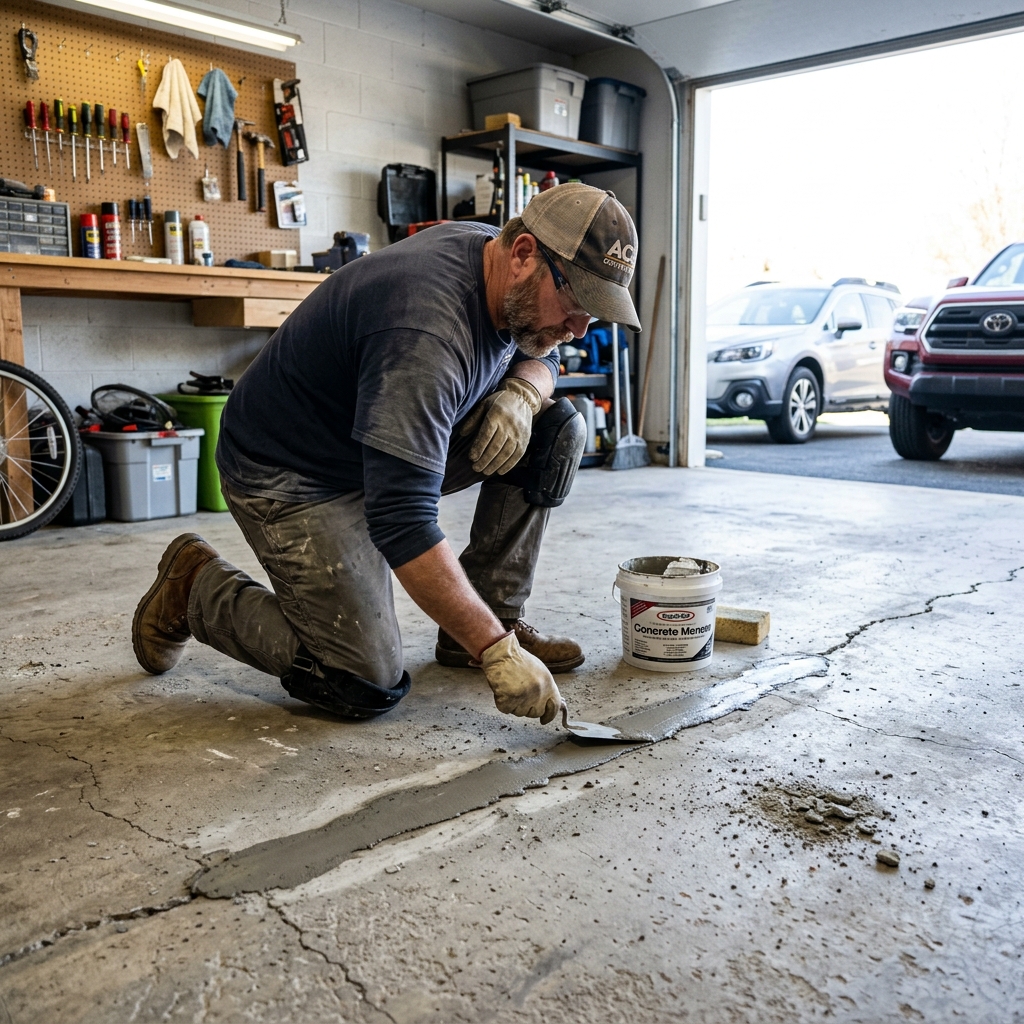
- Severe Cracking or Fractures: While minor hairline cracks might be cosmetic, widespread, deep, or spiderweb-patterned cracking indicates structural issues within the epoxy or the concrete below. This can be caused by substrate movement, heavy impacts, or thermal expansion/contraction exaggerated by Florida's intense heat cycles. These cracks can compromise the floor's protective barrier and lead to further damage.
- Widespread Bubbling, Blistering, or Pinholes: Small bubbles (pinholes) can appear from trapped air during application, but widespread blistering (larger, raised bubbles) often signals moisture issues, solvent pop, or chemical reactions. In Tampa, high humidity and concrete slab moisture are frequent contributors to these issues, weakening the epoxy's bond and creating vulnerable spots.
- Significant Discoloration or Fading (Beyond UV Stabilization): While some fading is natural over decades, rapid or uneven discoloration, especially yellowing (ambering), can indicate severe UV exposure or chemical degradation. If your floor's color is dramatically changing, its protective qualities might also be diminishing, making it susceptible to wear and tear.
- Excessive Abrasion or Wear-Through: If your epoxy floor is showing significant wear, with the concrete substrate visible underneath in high-traffic areas, the protective topcoat has failed. This compromises the floor's chemical resistance, impact protection, and aesthetic appeal. This is especially problematic in commercial settings or industrial facilities in Tampa where safety and hygiene are paramount.
Ignoring these signs can lead to more extensive damage, potential safety hazards, and ultimately, a more costly and complex replacement project.
Why Do Epoxy Floors Fail Prematurely in Florida's Climate?
Tampa's unique climate poses specific challenges for epoxy flooring, making proper installation and material selection paramount. Premature failure often stems from these key factors:
- High Humidity and Substrate Moisture: The Gulf Coast's pervasive humidity means concrete slabs are constantly exposed to moisture. If a vapor barrier isn't properly installed or the concrete's moisture content isn't adequately tested before application, moisture vapor can push through the slab, causing delamination and bubbling.
- UV Exposure: Florida's intense sunlight can degrade standard epoxy resins over time, leading to yellowing, chalking, and loss of adhesion. While UV-resistant topcoats are available, using inappropriate materials or inadequate protection can accelerate failure, particularly in outdoor or sun-exposed indoor areas.
- Improper Surface Preparation: This is arguably the most common cause of epoxy floor failure. If the concrete isn't thoroughly cleaned, profiled (ground or shot-blasted), and free of contaminants (oil, grease, sealers), the epoxy won't bond properly. In a busy city like Tampa, where many older properties exist, proper substrate preparation can be complex and requires expert techniques.
- Inferior Materials or Application Techniques: Cutting corners with low-quality epoxy products or inexperienced installers can lead to floors that fail to meet performance expectations. Incorrect mixing ratios, improper curing times, or applying epoxy in unsuitable environmental conditions (like high temperatures or direct sunlight without proper controls) can significantly weaken the final product.
Understanding these regional challenges is why choosing a local, experienced professional is critical for durable epoxy flooring in Tampa and even neighboring areas like Gibsonton.
What Happens During a Professional Epoxy Floor Inspection in Tampa?
When you contact Tampa Epoxy Flooring Pros for a critical issue, our approach is thorough and scientific. Our goal is to identify the root cause of the problem, not just treat the symptoms. Here's what you can expect:
- Initial Consultation and Visual Assessment: We'll discuss your concerns, the history of the floor, and conduct a detailed visual inspection to identify all areas of damage, their patterns, and severity.
- Moisture Vapor Transmission (MVT) Testing: Given Tampa's climate, MVT testing is non-negotiable. We use calcium chloride tests (ASTM F1869) or in-situ relative humidity probes (ASTM F2170) to accurately measure the moisture content in your concrete slab. This tells us if moisture is pushing up from below, a common cause of delamination and blistering.
- Adhesion Testing: We perform adhesion pull tests (ASTM D7234) on affected and unaffected areas. This involves gluing a dolly to the epoxy surface and using a specialized device to measure the force required to pull it off. This quantifies the strength of the bond between the epoxy and the substrate, indicating if there's a bonding failure.
- Substrate Evaluation: We assess the concrete itself for cracks, spalling, efflorescence, or previous coatings that might be interfering with the epoxy's bond. We also check for signs of alkali-silica reaction (ASR) which can degrade concrete from within.
- Environmental Condition Assessment: We measure ambient temperature, humidity, and dew point during the inspection, as these factors play a significant role in the curing and long-term performance of epoxy coatings.
- Detailed Report and Recommendations: Based on our findings, we provide a comprehensive report detailing the root cause of the failure, photos of the damage, and a clear set of recommendations. This might include targeted repairs, full system replacement, or specific preparation techniques to prevent recurrence.
Can All Damaged Epoxy Floors Be Repaired, or Is Replacement Necessary?
The decision to repair or replace a damaged epoxy floor in Tampa depends heavily on the severity, extent, and underlying cause of the failure. Our professional assessment will guide you to the most cost-effective and long-lasting solution.
- When Repair is Possible:
- Isolated Damage: Small, localized areas of bubbling, minor cracks, or superficial abrasion can often be successfully repaired. This involves carefully grinding away the damaged section, preparing the substrate, and reapplying epoxy.
- Topcoat Wear: If only the topcoat is worn but the base coats are intact and well-adhered, a new wear layer can be applied after proper preparation.
- Specific Chemical Stains: Depending on the chemical and the extent of the penetration, sometimes a localized repair is feasible.
- When Replacement is Necessary:
- Widespread Delamination: If the epoxy is delaminating over large areas due to widespread moisture issues or complete bond failure, a full replacement is usually the only reliable solution. Attempting to patch extensive delamination often leads to recurring problems.
- Structural Cracks in Substrate: If the underlying concrete slab has severe, active structural cracks that continue to move, merely patching the epoxy won't suffice. The slab may need repair or remediation before a new epoxy system can be applied.
- Multiple, Compounding Issues: When a floor exhibits several critical issues simultaneously—e.g., severe cracking, widespread delamination, and extensive discoloration—the integrity of the entire system is compromised, making full replacement the most economical long-term choice.
- Hazardous Contamination: In some commercial or industrial settings, if the epoxy has been compromised by hazardous chemicals that have deeply penetrated the coating, a full removal and replacement may be required for safety and compliance.
Ultimately, our expert team provides honest, transparent recommendations. We consider not just the immediate fix, but the long-term performance and value for your property, whether it's a bustling commercial space near the Busch Gardens Area or a residential garage in South Tampa.
Protect Your Investment: Act Quickly When Warning Signs Appear
Your epoxy floor is a significant investment in your property's aesthetics, durability, and safety. Ignoring critical warning signs can transform minor issues into major, expensive problems. Especially in Tampa's challenging environment, proactive assessment and timely intervention are crucial.
Don't wait for a small problem to become a crisis. If you've noticed any of these critical warning signs on your epoxy floor, or if you're unsure about its current condition, contact Tampa Epoxy Flooring Pros today. Our experienced local technicians are ready to provide a thorough inspection and offer expert solutions tailored to your needs. Protect your floor, protect your investment – call us now for a consultation!
Need Professional Assistance?
Get a free, no-obligation estimate from our expert local team today.