October 27, 2026•By Senior Epoxy Flooring Specialist
Don't Ignore These Signs: Urgent Epoxy Floor Failure & Repair in Tampa, FL
Promptly identifying and addressing epoxy floor failure is crucial for preventing extensive damage, maintaining safety, and preserving the aesthetic and functional integrity of your concrete surfaces. In Tampa, FL, environmental factors like high humidity and heat can accelerate wear, making professional assessment and timely intervention essential to restore your floor's performance and appearance.
Epoxy flooring is renowned for its durability, chemical resistance, and aesthetic appeal, making it a popular choice for homes and businesses across Tampa, FL. However, even the toughest coatings can succumb to wear, improper installation, or environmental stressors. Recognizing the early signs of epoxy floor failure can save you significant time and money by allowing for timely repairs rather than a full replacement. As experienced professionals in the Tampa Bay area, we understand the specific challenges local conditions pose to epoxy systems.
An epoxy floor should be a seamless, resilient surface. Any deviation from this ideal state could indicate an underlying problem. Here are the most common red flags to watch out for:
Ignoring these warning signs can lead to more extensive damage, potential safety hazards (like tripping on peeling edges), and costly repairs down the line. If you notice any of these issues, especially in high-traffic commercial settings or garages in Sulphur Springs, it's time to call in the experts.
Understanding the root causes of failure is key to effective repair and prevention. Many factors contribute, with Tampa's environment playing a significant role:
Our team understands these local factors intimately, ensuring that our installations and repairs are designed to withstand Tampa's unique environmental challenges.
The decision to repair or completely replace your epoxy floor depends on the extent and nature of the damage. A professional assessment is always recommended, but here's a general guide:
Consider Repair If:
Minor repairs might involve grinding down a small section, preparing the substrate, and reapplying epoxy or a suitable patch. This can be a cost-effective solution for extending the life of your floor.
Consider Replacement If:
A full replacement involves removing the old epoxy, thoroughly preparing the concrete, addressing any underlying issues like moisture vapor, and then installing a new, robust epoxy system. While more costly upfront, it guarantees a fresh start and a long-lasting solution, often proving more economical than repeated, failed repairs in places like Safety Harbor.
When you contact Tampa Epoxy Flooring Pros for a failing floor, our process is thorough and transparent:
Don't let a failing epoxy floor diminish the value or safety of your property. Our licensed and experienced specialists at Tampa Epoxy Flooring Pros are here to provide expert diagnosis and long-lasting solutions. For a professional assessment and to discuss your epoxy floor repair or replacement needs in Tampa, FL, call us today!
Epoxy flooring is renowned for its durability, chemical resistance, and aesthetic appeal, making it a popular choice for homes and businesses across Tampa, FL. However, even the toughest coatings can succumb to wear, improper installation, or environmental stressors. Recognizing the early signs of epoxy floor failure can save you significant time and money by allowing for timely repairs rather than a full replacement. As experienced professionals in the Tampa Bay area, we understand the specific challenges local conditions pose to epoxy systems.
What Are the Common Signs of Epoxy Floor Failure in Tampa?
An epoxy floor should be a seamless, resilient surface. Any deviation from this ideal state could indicate an underlying problem. Here are the most common red flags to watch out for:
- Peeling or Delamination: This is perhaps the most visible sign of failure. If the epoxy layer is lifting away from the concrete slab, even in small sections, it indicates a loss of adhesion. This often starts at edges or in high-traffic areas and can spread rapidly.
- Cracking: While epoxy is flexible, deep or widespread cracks can signal substrate movement, improper concrete preparation, or a coating that's too brittle. Hairline cracks might be cosmetic, but larger cracks compromise the floor's integrity.
- Bubbling or Blistering: Small, raised bumps or air pockets in the epoxy surface suggest moisture trapped beneath the coating trying to escape, or gases released during curing. This is particularly common in humid climates like Tampa's if proper moisture mitigation wasn't performed.
- Chipping or Flaking: If pieces of the epoxy are breaking off, it points to a weakened bond or insufficient thickness. Heavy impacts, chemical spills, or even just regular foot traffic can exacerbate this if the coating isn't performing as it should.
- Dull Spots or Discoloration: While some wear is normal over time, significant dulling, chalkiness, or patchy discoloration can indicate chemical degradation, UV exposure (especially in areas exposed to sunlight), or the breakdown of the topcoat.
- Soft Spots or Indentations: An epoxy floor should be hard and resilient. If areas feel soft underfoot or dent easily, it suggests an issue with the epoxy's cure or formulation.
Ignoring these warning signs can lead to more extensive damage, potential safety hazards (like tripping on peeling edges), and costly repairs down the line. If you notice any of these issues, especially in high-traffic commercial settings or garages in Sulphur Springs, it's time to call in the experts.
What Causes Epoxy Floors to Fail, Especially in Tampa's Climate?
Understanding the root causes of failure is key to effective repair and prevention. Many factors contribute, with Tampa's environment playing a significant role:
- Improper Surface Preparation: This is the number one cause of epoxy failure. If the concrete isn't properly cleaned, profiled (roughened), and free of contaminants (oil, grease, sealers, old paint), the epoxy won't adhere correctly. In Tampa, moisture in the slab is a huge concern that must be addressed.
- Moisture Vapor Transmission (MVT): Florida's high water table and constant humidity mean concrete slabs often have elevated levels of moisture vapor moving through them. If not tested and mitigated, this vapor can push up and debond the epoxy, leading to bubbles and peeling.
- Incorrect Mixing or Application: Epoxy is a two-part system that requires precise mixing ratios and careful application techniques. Errors in mixing, applying too thin or too thick, or not allowing proper cure times can severely compromise the coating's performance.
- Substrate Movement: Concrete slabs can expand, contract, and settle. If the epoxy isn't flexible enough to accommodate these movements, it can crack.
- Chemical Exposure: While epoxy is chemical resistant, prolonged exposure to harsh chemicals or industrial solvents it wasn't designed for can degrade the surface.
- UV Exposure: Many epoxy formulations are not UV stable. Direct sunlight can cause them to yellow, chalk, or become brittle over time, leading to cracking and dullness. This is a common issue for outdoor applications or garages with open doors in Tampa.
- Impact & Abrasion: Heavy impacts, dragging sharp objects, or continuous heavy abrasion can wear down or chip the epoxy surface, especially if the coating thickness or hardness isn't adequate for the environment.
Our team understands these local factors intimately, ensuring that our installations and repairs are designed to withstand Tampa's unique environmental challenges.
Should You Repair or Replace a Failing Epoxy Floor in Tampa?
The decision to repair or completely replace your epoxy floor depends on the extent and nature of the damage. A professional assessment is always recommended, but here's a general guide:
Consider Repair If:
- The damage is localized (e.g., a small area of peeling or a single crack).
- The underlying concrete slab is still sound and hasn't suffered significant damage.
- The failure is due to a minor application error or a single incident.
- The majority of the floor remains in good condition.
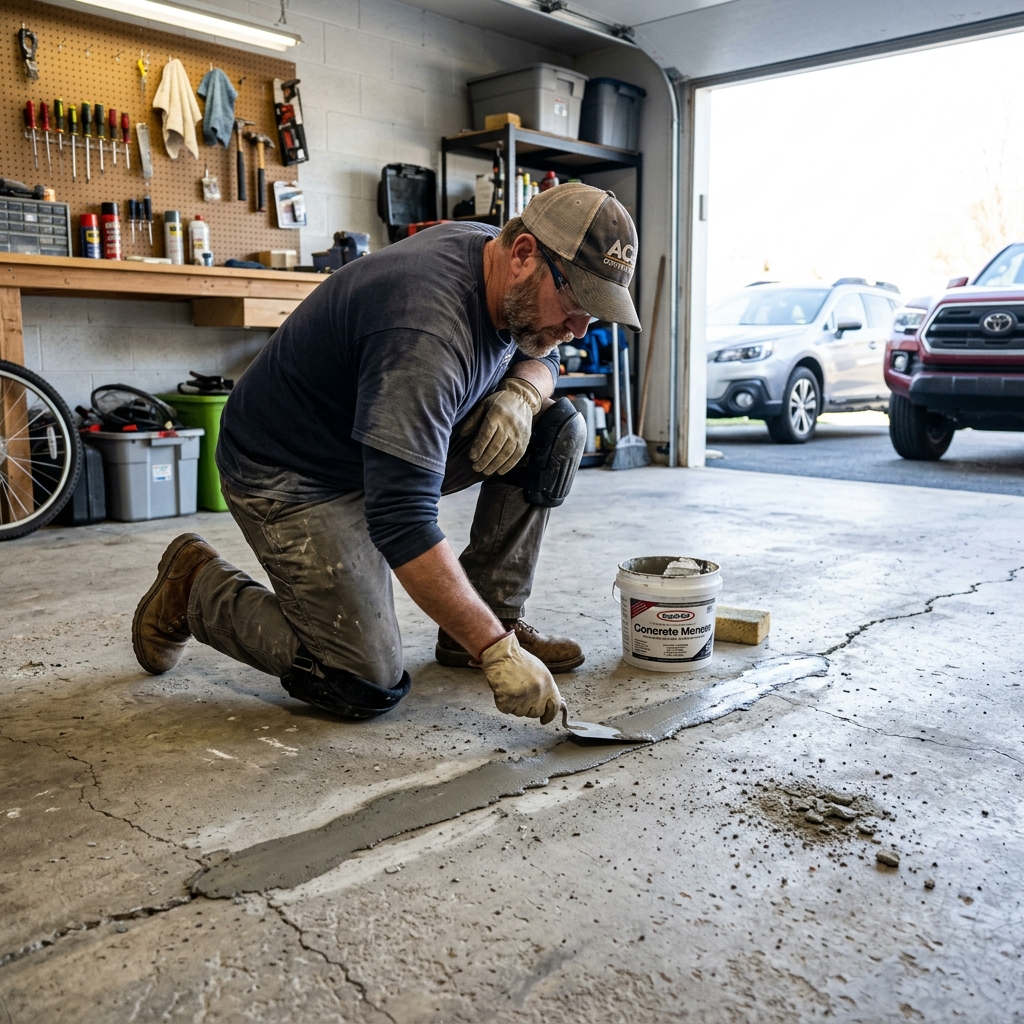
Minor repairs might involve grinding down a small section, preparing the substrate, and reapplying epoxy or a suitable patch. This can be a cost-effective solution for extending the life of your floor.
Consider Replacement If:
- The damage is widespread (e.g., extensive delamination, multiple large cracks throughout the floor).
- The concrete substrate itself is severely damaged (e.g., spalling, significant structural cracks, severe moisture issues).
- The existing epoxy system was fundamentally flawed from the start (e.g., incorrect product for the application, severe moisture problems that were never addressed).
- You're looking to change the aesthetic or performance characteristics of your floor entirely.
A full replacement involves removing the old epoxy, thoroughly preparing the concrete, addressing any underlying issues like moisture vapor, and then installing a new, robust epoxy system. While more costly upfront, it guarantees a fresh start and a long-lasting solution, often proving more economical than repeated, failed repairs in places like Safety Harbor.
What to Expect During a Professional Epoxy Floor Inspection?
When you contact Tampa Epoxy Flooring Pros for a failing floor, our process is thorough and transparent:
- Initial Consultation: We'll discuss the issues you're experiencing, the history of the floor, and your concerns.
- Visual Assessment: Our technicians will meticulously inspect the entire floor surface, identifying areas of peeling, cracking, bubbling, discoloration, and other signs of failure.
- Moisture Testing: Crucial for Tampa, we'll perform moisture vapor transmission tests to determine if latent moisture in the slab is contributing to or causing the failure. This might involve calcium chloride tests or relative humidity probes.
- Adhesion Testing: We may conduct adhesion tests to measure how well the existing epoxy is bonded to the concrete.
- Substrate Evaluation: We'll assess the condition of the concrete slab itself, checking for structural issues, spalling, or prior repairs.
- Failure Analysis: Based on our findings, we'll determine the root cause(s) of the epoxy failure.
- Detailed Recommendations & Quote: We'll provide a comprehensive report outlining our findings, explaining the causes of failure, and presenting clear options for repair or replacement, along with a transparent cost estimate. Our recommendations will always prioritize the most durable and cost-effective solution for your specific situation.
Don't let a failing epoxy floor diminish the value or safety of your property. Our licensed and experienced specialists at Tampa Epoxy Flooring Pros are here to provide expert diagnosis and long-lasting solutions. For a professional assessment and to discuss your epoxy floor repair or replacement needs in Tampa, FL, call us today!
Need Professional Assistance?
Get a free, no-obligation estimate from our expert local team today.