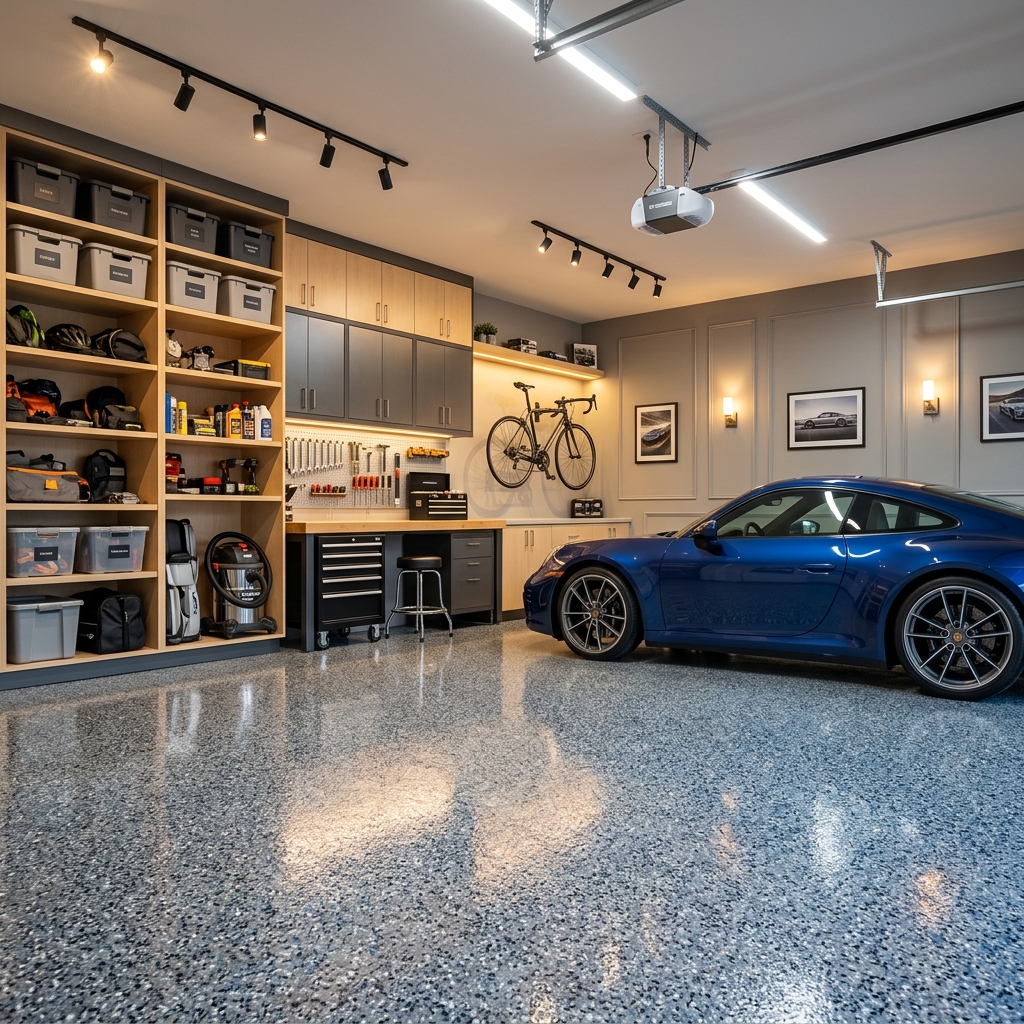
Repair vs. Replace: Expert Guide to Tampa Epoxy Flooring Problems & Solutions
Determining whether to repair or completely replace your epoxy flooring in Tampa, FL, hinges on the extent of damage, its underlying cause, and your long-term goals. Minor chips and surface wear can often be expertly patched or recoated, extending your floor's life. However, widespread delamination, deep cracks, or significant substrate issues typically warrant a full replacement for safety, aesthetics, and lasting durability.
Epoxy flooring is renowned for its durability, aesthetic appeal, and resistance to chemicals and abrasions, making it a popular choice for homes and businesses across Tampa, FL. From bustling commercial kitchens to high-traffic industrial warehouses and elegant residential garages, epoxy delivers a resilient surface. However, even the toughest floors are susceptible to wear, tear, and specific environmental challenges over time. In Tampa’s unique climate, characterized by high humidity and intense sun exposure, understanding the common problems and knowing when to opt for repair versus a complete replacement is crucial for maintaining your investment.
What Are Common Epoxy Flooring Problems in Tampa's Climate?
Tampa's subtropical climate, with its high humidity and temperature fluctuations, presents specific challenges for epoxy flooring. These environmental factors, combined with everyday use, contribute to various issues:
- Peeling or Delamination: This is arguably one of the most common and frustrating problems. It occurs when the epoxy coating separates from the concrete substrate. In Tampa, high moisture vapor transmission (MVT) from the concrete slab, often exacerbated by humidity, is a primary culprit. Inadequate surface preparation, such as not properly cleaning or profiling the concrete, or applying epoxy over a damp surface, also leads to poor adhesion.
- Bubbling or Blistering: Small air pockets or blisters form on the surface. This can be due to outgassing from the concrete (air trapped in the slab escaping during curing), applying epoxy in high humidity, or applying it too thickly, trapping solvent vapors. In New Tampa, where properties can be older and have varying slab conditions, moisture testing is paramount to prevent this.
- Cracking or Chipping: While epoxy is strong, extreme impact, heavy point loads, or significant substrate movement can cause cracks or chips. Hairline cracks in the underlying concrete can also translate through the epoxy. UV exposure, especially in outdoor or sun-drenched areas, can make some epoxy types brittle over time, increasing their susceptibility to cracking.
- Dulling or Discoloration: Over years of heavy traffic, chemical spills, or prolonged UV exposure (if a non-UV stable epoxy is used outdoors), the vibrant finish can become dull or discolored, often yellowing. This is primarily an aesthetic issue but can indicate a need for a fresh topcoat or more robust solution.
- Chalking: This phenomenon, where the epoxy surface develops a chalky, powdery residue, is almost always a result of UV degradation. It’s common on exterior epoxy applications or those exposed to direct sunlight without proper UV-resistant topcoats.
When Can Epoxy Flooring Be Repaired, and What's Involved?
Many common epoxy flooring issues are amenable to professional repair, saving you the cost and inconvenience of a full replacement. The key is early detection and proper diagnosis by an experienced technician.
Signs Your Epoxy Can Be Repaired:
- Isolated chips, scratches, or minor gouges.
- Small areas of localized peeling (e.g., near a specific impact zone).
- Surface dullness or minor discoloration that hasn't compromised the integrity.
- Small, non-structural cracks in the epoxy, not extending deep into the concrete.
Professional Repair Process:
- Assessment: A Tampa Epoxy Flooring Pros technician will thoroughly inspect the damage, identify the root cause, and determine the most effective repair strategy. This often includes moisture testing of the slab.
- Surface Preparation: The damaged area is meticulously cleaned, ground, or sanded to ensure proper adhesion for the new material. Loose or delaminated sections are completely removed.
- Patching & Priming: Specialized epoxy patching compounds are used to fill chips, cracks, and divots. A primer may be applied to ensure maximum bond strength.
- Color & Texture Matching: Great care is taken to match the original epoxy’s color, texture, and finish as closely as possible, ensuring a seamless repair. This is especially important for decorative flake or metallic systems.
- Application & Curing: New epoxy layers are applied, often followed by a topcoat, and allowed to cure fully according to manufacturer specifications.
Repair costs vary depending on the extent of the damage, the type of epoxy, and the complexity of the repair. For businesses or homeowners in Riverside Heights experiencing minor isolated issues, repairs are often a highly cost-effective solution to restore both functionality and aesthetics.
What Are the Key Signs That Replacement is the Better Option?
While repairs are often feasible, there comes a point where a full epoxy floor replacement becomes the more practical, durable, and ultimately cost-effective solution. Ignoring these signs can lead to ongoing problems, safety hazards, and wasted repair efforts.
Critical Indicators for Replacement:
- Widespread Delamination: If peeling or delamination is extensive, covering large portions of the floor and not just isolated spots, it usually indicates a systemic issue with the original installation or significant moisture problems that require a complete overhaul.
- Deep & Extensive Cracking: Cracks that are wide, deep, or spider-webbing across the surface often signify serious structural issues with the underlying concrete slab. Patching these will only be a temporary fix, as the slab movement will likely cause new cracks.
- Significant Substrate Damage: If the concrete slab itself is severely deteriorated, spalling, or crumbling, no amount of epoxy repair will compensate. The foundation must be addressed first, which usually means removing the old epoxy to properly repair or resurface the concrete.
- Contamination Beyond Repair: Floors that have suffered severe chemical spills, oil saturation, or other forms of deep contamination may be impossible to properly clean and prepare for new epoxy adhesion, making replacement necessary.
- Safety Hazards: If the floor is uneven, severely delaminated, or has large tripping hazards that cannot be smoothed out with simple repairs, it poses a significant safety risk in commercial or residential settings.
- Age & Outdated Appearance: Sometimes, a floor is simply past its prime. If it looks tired, dated, and numerous repairs would only create a patchwork appearance, a fresh, new epoxy system can dramatically enhance your property's value and aesthetics.
The cost of replacement can seem daunting, but it often provides a long-term solution, addresses underlying issues, and allows for upgrades to modern, high-performance epoxy systems. It also resets the clock on your floor's lifespan.
How Do Tampa Epoxy Flooring Pros Assess Your Floor?
Making the right decision between repair and replacement requires expert knowledge and an impartial assessment. At Tampa Epoxy Flooring Pros, our process is thorough and designed to provide you with clear, actionable recommendations:
- Initial Consultation & Visual Inspection: We begin by discussing your concerns, the history of the floor, and conducting a detailed visual inspection to identify all visible signs of damage, wear patterns, and potential causes.
- Moisture Testing: Crucial for Tampa’s climate, we utilize advanced moisture meters to assess the moisture content and relative humidity within your concrete slab. High moisture levels are a primary cause of epoxy failure and must be addressed before any new application.
- Adhesion Testing: In some cases, we may perform pull-off adhesion tests to quantitatively measure how well the existing epoxy is bonded to the concrete. This helps determine the integrity of the remaining coating.
- Substrate Evaluation: We examine the condition of the concrete substrate for cracks, spalling, and other damage that might impact the long-term success of either repair or replacement.
- Detailed Report & Recommendation: Based on our comprehensive findings, we provide you with a transparent report outlining the extent of the damage, the likely causes, and a professional recommendation for either repair or replacement. We’ll explain the pros and cons of each option, including estimated costs and timelines.
- Customized Solution & Quote: Whether it’s a precise patch, a complete removal and reapplication, or an upgrade to a more robust system tailored for high-humidity environments, we provide a detailed, no-obligation quote for the recommended solution.
Don't let damaged epoxy floors detract from your property's value or compromise safety. If you're observing any signs of wear or failure on your epoxy flooring in Tampa, FL, or surrounding areas, it's time to consult the experts. The team at Tampa Epoxy Flooring Pros has the experience, technology, and local knowledge to accurately diagnose your floor's condition and provide a durable, cost-effective solution. Contact us today for a professional, no-obligation assessment and ensure your epoxy floor remains a strong, beautiful asset for years to come!
Need Professional Assistance?
Get a free, no-obligation estimate from our expert local team today.