Advanced Epoxy Floor Repair: When to Call Tampa's Pros for Lasting Solutions
Severe epoxy flooring damage in Tampa, FL, often requires professional intervention due to underlying substrate issues, delamination, or widespread chemical erosion that DIY fixes cannot address. Expert repair ensures structural integrity, prevents further degradation, and restores the floor's protective qualities and aesthetic appeal, safeguarding your investment against Tampa's unique environmental challenges.
Epoxy flooring is renowned for its durability, aesthetic appeal, and resistance to common wear and tear. However, even the most robust epoxy systems can succumb to significant damage over time, especially when exposed to the demanding conditions of Tampa, FL. From persistent humidity to heavy industrial use or accidental impacts, your epoxy floor might eventually display issues that go beyond simple cosmetic flaws. When these problems arise, understanding the difference between minor surface imperfections and serious structural damage is crucial. Attempting DIY fixes for advanced epoxy damage often leads to more extensive problems and higher costs down the line. That's when it's time to call in the dedicated professionals at Tampa Epoxy Flooring Pros.
What Are the Key Signs of Serious Epoxy Floor Damage in Tampa?
Identifying significant damage early is vital for effective repair and maintaining your floor's longevity. Here are the critical indicators that your epoxy flooring needs professional attention:
- Extensive Delamination (Peeling or Flaking): This is perhaps the most common and serious sign. Delamination occurs when the epoxy coating separates from the concrete substrate or from previous layers. It can appear as bubbles, flakes, or large sheets of epoxy lifting off the floor. This often points to improper surface preparation, moisture issues, or poor adhesion during installation.
- Deep and Wide Cracking: While hairline cracks can sometimes be addressed with minor repairs, deep or wide cracks (especially those that propagate through the substrate) indicate underlying structural movement or severe impact. These cracks compromise the floor's integrity and can allow moisture or contaminants to penetrate.
- Widespread Bubbling or Blistering: Beyond minor surface bubbles that might appear during curing, widespread or reoccurring bubbling suggests moisture vapor transmission (MVT) from the concrete substrate, osmotic blistering, or trapped solvents. This is a critical issue that requires a professional assessment of moisture levels.
- Significant Chemical Staining or Etching: While epoxy is chemical-resistant, prolonged exposure to harsh acids, strong solvents, or corrosive materials can lead to permanent etching, discoloration, or softening of the coating. If the damage penetrates the topcoat, professional resurfacing or repair is necessary.
- Severe Impact Craters or Pitting: Heavy objects dropped on the floor or continuous abrasive forces can create deep craters or pits. These not only compromise the floor's appearance but also its protective barrier, making it vulnerable to further damage and contamination.
- Failing or Crumbling Joints/Seams: If the expansion joints or control joints within your epoxy floor are failing, crumbling, or poorly filled, it can lead to stress cracks in the epoxy and expose the underlying concrete to damage.
Why Do Epoxy Floors Fail in Tampa's Unique Environment?
Tampa's climate and local conditions present specific challenges that can contribute to epoxy floor failure if not properly mitigated during installation or addressed during maintenance:
- High Humidity and Moisture Vapor Transmission (MVT): Tampa's high humidity means concrete slabs are constantly exposed to moisture. If a vapor barrier isn't properly installed or the concrete isn't adequately dry before epoxy application, moisture rising through the slab can cause delamination and bubbling.
- Extreme Heat and UV Exposure: Garages or outdoor areas in direct sunlight can experience high surface temperatures. While most epoxies are heat-resistant, prolonged exposure to intense UV rays can cause ambering, chalking, and degradation of certain epoxy types, reducing their protective qualities.
- Coastal Air and Saltwater Intrusion: For properties closer to the coast, salt in the air can contribute to faster degradation of materials, and in cases of flooding, saltwater can be corrosive to compromised epoxy surfaces.
- Substrate Issues: Poor quality concrete, existing cracks, or contaminated substrates (oil, grease, previous adhesives) not properly prepared are primary reasons for epoxy failure. Tampa's older industrial buildings, for instance, might have sub-optimal concrete that requires expert preparation.
- Heavy Traffic and Industrial Use: Many commercial and industrial facilities in Tampa experience constant heavy foot traffic, machinery movement, and chemical spills. While epoxy is designed for this, extreme conditions or unexpected impacts can still lead to damage over time.
What Does a Professional Epoxy Floor Repair Process Involve?
When you call Tampa Epoxy Flooring Pros for advanced epoxy repair, you're investing in a systematic and precise approach:
- Thorough Inspection and Diagnosis: Our technicians will conduct a detailed assessment of your floor, identifying the type and extent of damage, performing moisture tests (e.g., calcium chloride or relative humidity probes), and checking for substrate integrity and adhesion issues. This diagnostic phase is crucial for determining the root cause of the failure.
- Precise Surface Preparation: This is the cornerstone of any successful epoxy repair. Damaged areas will be mechanically ground, scarified, or shot-blasted to remove compromised epoxy, contaminants, and to create an optimal profile for new material adhesion. This often includes feathering existing epoxy edges for a seamless transition.
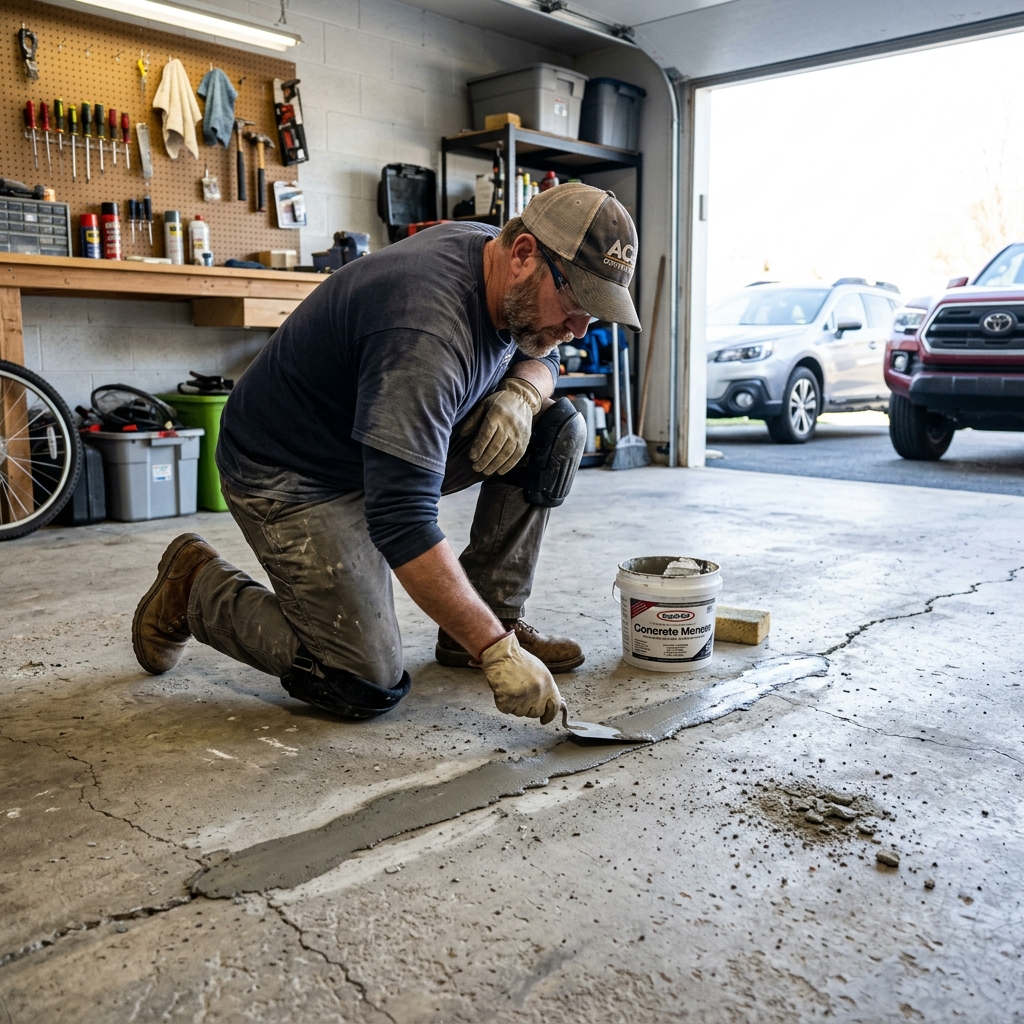
- Targeted Crack and Chip Repair: Depending on the crack's size and depth, we'll use specialized epoxy crack fillers, polyurea joint fillers, or flexible sealants to repair and stabilize these areas. For chips and craters, epoxy patching compounds are meticulously applied and leveled.
- Delamination Remediation: For delaminated sections, the loose epoxy is completely removed, the concrete substrate is re-prepped, and appropriate primers and new epoxy layers are applied, often with moisture mitigation solutions if MVT is identified as the cause.
- Moisture Mitigation (If Needed): If high moisture vapor transmission is detected, a specialized moisture barrier epoxy primer will be applied before any further coatings to prevent future delamination.
- Re-coating and Finishing: Once repairs are cured and stable, the affected areas, or sometimes the entire floor, will receive new layers of epoxy and a topcoat to ensure uniformity, durability, and a seamless finish. This final layer is crucial for aesthetics and long-term protection, whether for a residential garage or a busy warehouse in University Square.
Repair or Replace: How Do Tampa Pros Make the Decision?
The decision to repair or fully replace an epoxy floor is complex and depends on several factors that our experts will evaluate during an on-site consultation:
- Extent of Damage: If damage is localized to a small percentage of the floor (e.g., 10-20%), targeted repair is usually the most cost-effective option. Widespread, severe damage affecting 50% or more of the surface often makes replacement more practical in the long run.
- Underlying Substrate Condition: If the concrete slab itself is severely damaged, has extensive structural cracks, or is contaminated beyond simple remediation, a full floor replacement (including substrate repair or replacement) might be necessary.
- Age of the Existing Floor: Very old epoxy floors nearing the end of their service life, even with localized damage, might benefit more from a full replacement, as other sections could fail soon.
- Cost-Effectiveness: We provide transparent cost breakdowns for both repair and replacement scenarios. Sometimes, a series of complex repairs can approach the cost of a new installation, making replacement the better investment for a fresh start and extended lifespan.
- Desired Outcome: If you're looking for a complete aesthetic overhaul, a change in color, or a different epoxy system (e.g., from a standard solid color to a metallic flake), replacement is the clear choice. If preserving the existing system with minimal disruption is key, repair is preferred. For businesses needing comprehensive floor assessment in South Tampa, our team provides detailed, customized recommendations.
Don't let serious epoxy floor damage compromise the safety, functionality, or appearance of your property in Tampa, FL. Investing in professional repair from Tampa Epoxy Flooring Pros ensures your floor is restored to its optimal condition, protecting your investment for years to come. Our experienced technicians use industry-leading techniques and materials to deliver durable, lasting solutions. Contact Tampa Epoxy Flooring Pros today for a comprehensive assessment and a free, no-obligation quote. Let us bring your epoxy floor back to life!
Need Professional Assistance?
Get a free, no-obligation estimate from our expert local team today.