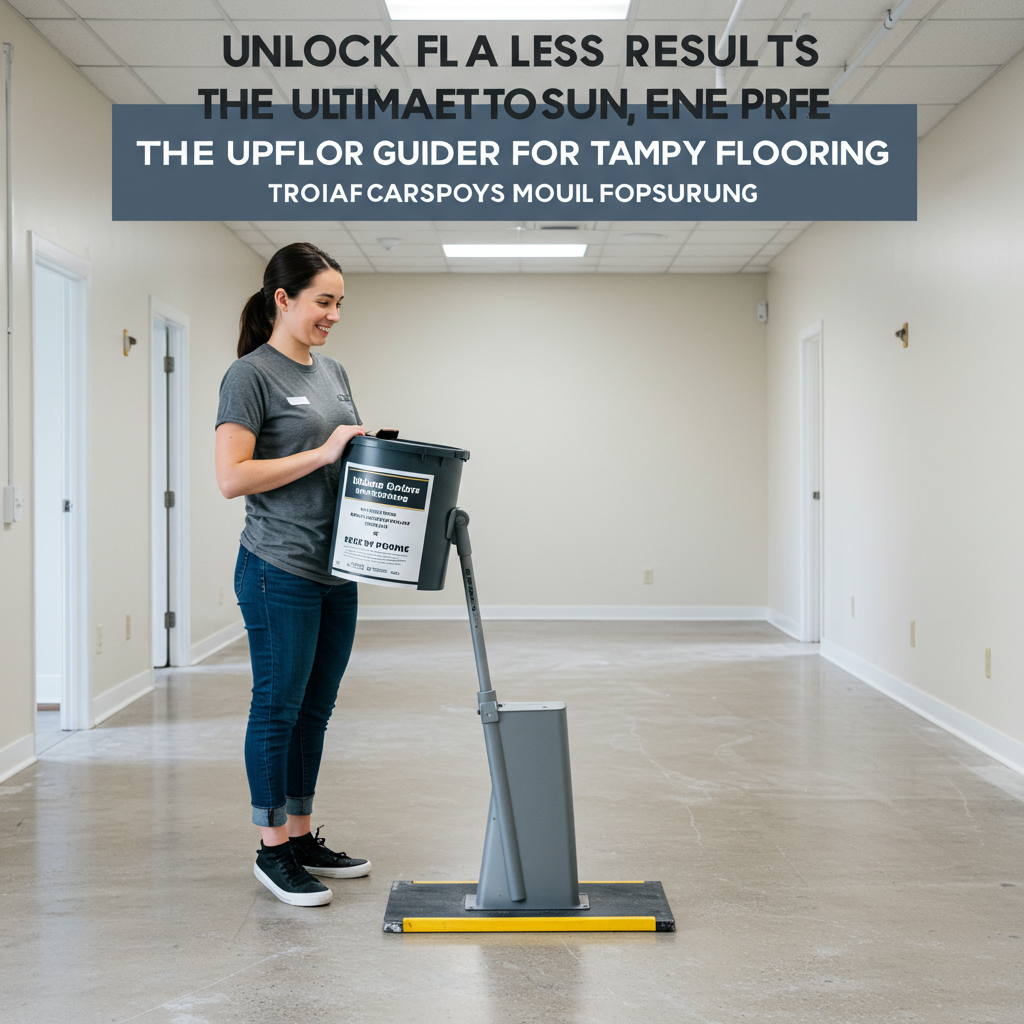
Unlock Flawless Results: The Ultimate Guide to Subfloor Prep for Tampa Epoxy Flooring
In the vibrant, humid climate of Tampa, Florida, homeowners and businesses alike appreciate the resilience and aesthetic appeal of epoxy flooring. From garage floors to commercial spaces, epoxy provides a durable, low-maintenance surface that stands up to heavy traffic and spills. However, the secret to a truly long-lasting and beautiful epoxy floor isn't just in the quality of the epoxy product itself, but profoundly in the meticulous preparation of the subfloor beneath it. Many issues that arise with epoxy floors, such as peeling, blistering, or unevenness, can almost always be traced back to insufficient or improper subfloor preparation. Understanding and executing this crucial phase is paramount, especially in a region like Tampa where moisture and soil conditions present unique challenges.
Why Is Subfloor Preparation the Foundation of Lasting Epoxy Floors in Tampa?
The subfloor is the canvas for your epoxy masterpiece. Without a properly prepared canvas, even the finest paint will fail to adhere, crack, or flake over time. For epoxy, adhesion is everything. Epoxy coatings bond to the subfloor through a mechanical process, meaning they physically grip the surface. If the surface is contaminated, weak, or uneven, this mechanical bond is compromised from the start. In Tampa, where humidity is a constant factor and concrete slabs are common, neglecting subfloor preparation is an open invitation for costly problems down the line.
- Optimal Adhesion: A clean, porous, and stable surface allows the epoxy to penetrate and create a strong, lasting bond, preventing delamination.
- Preventing Failures: Proper prep minimizes risks of bubbling, blistering, peeling, and cracking, which often stem from trapped moisture or poor adhesion.
- Ensuring Longevity: A well-prepped subfloor significantly extends the lifespan of your epoxy coating, protecting your investment for decades.
- Achieving Aesthetics: A smooth, even subfloor translates into a smooth, even, and visually appealing finished epoxy surface. Imperfections in the subfloor will be magnified by the glossy epoxy.
What Specific Techniques Ensure a Perfect Concrete Surface for Epoxy Adhesion in Tampa?
Preparing a concrete subfloor for epoxy isn't merely about cleaning; it's a multi-step process that requires specialized knowledge and equipment. Each step is critical to ensuring the epoxy bonds correctly and performs as expected, especially given the demands of Tampa's environment.
- Thorough Cleaning and Degreasing: The first step involves removing all loose debris, dirt, grease, oil, paint, and other contaminants. This typically requires powerful industrial degreasers and mechanical scrubbing, followed by thorough rinsing and drying. Any residual contaminants will act as bond breakers.
- Crack and Spall Repair: Any cracks, chips, or spalled areas in the concrete must be properly repaired and filled using epoxy-based repair compounds. These repairs ensure a structurally sound and level surface, preventing cracks from propagating through the new epoxy layer. This is particularly important for high-traffic areas.
- Diamond Grinding or Shot Blasting: This is arguably the most crucial step. Concrete surfaces are often too smooth or contaminated for proper epoxy adhesion. Diamond grinding or shot blasting mechanically abrades the surface, removing the weak top layer (laitance), opening up the pores of the concrete, and creating a concrete surface profile (CSP) that allows the epoxy to properly grip. Acid etching, while sometimes used, is generally considered inferior to mechanical preparation, as it can leave salts that inhibit adhesion and doesn't achieve the necessary profile for optimal bonding.
- Edge Preparation: The edges and corners of the floor, where grinders may not reach effectively, require special attention with hand grinders to ensure consistent profiling across the entire surface.
- Vacuuming: After grinding, the floor must be thoroughly vacuumed using industrial-grade HEPA filtered vacuums to remove all dust and fine particles. Even a thin layer of dust can severely compromise the epoxy's bond.
- Self-Leveling Compounds (If Needed): For severely uneven floors, a self-leveling cementitious or epoxy-based compound may be applied after initial preparation to create a perfectly flat and smooth substrate before the final epoxy layers.
How Does Moisture Impact Epoxy Flooring in Humid Tampa, and How Is It Managed?
Tampa's subtropical climate means high humidity, which poses a significant challenge for epoxy flooring installations. Concrete is porous and can wick moisture from the ground, releasing it as vapor. This moisture vapor transmission (MVT) can cause severe problems for epoxy coatings if not properly addressed.
- Understanding Moisture Vapor Transmission: Even if a concrete slab appears dry on the surface, moisture can migrate up from below. When epoxy is applied over a high-MVT slab, the trapped moisture creates vapor pressure, leading to bubbles, blisters, and ultimately, delamination of the coating.
- Moisture Testing: Before any epoxy application in Tampa, professional installers conduct specific moisture tests. The most common methods include:
- Calcium Chloride Test: Measures the rate of moisture vapor emitted from the concrete surface over a set period.
- In-Situ Relative Humidity (RH) Probe Test: Involves drilling holes into the concrete and inserting probes to measure the internal relative humidity, providing a more accurate indicator of the slab's moisture condition.
- Moisture Mitigation Systems: If moisture test results indicate high MVT, a specialized moisture barrier primer or mitigation system must be applied before the standard epoxy coats. These primers create an impermeable layer that prevents moisture from reaching and damaging the epoxy. Skipping this step in Tampa's climate is a recipe for premature failure.
Preparing for Epoxy: What if Your Tampa Floor Isn't Just Bare Concrete?
While epoxy is predominantly applied to concrete, many residential and commercial spaces in Tampa feature other types of flooring that need to be removed and the underlying concrete prepared. This adds complexity and requires specific steps.
- Removing Existing Coatings or Sealers: If the concrete has old paint, sealers, or thin-set, these must be completely removed. Grinding is often the most effective method, ensuring that no residues remain to interfere with the new epoxy's bond.
- Tile or Vinyl Removal: When removing ceramic tile, vinyl, or linoleum, the primary concern is the adhesive residue left behind. This
Need Professional Assistance?
Get a free, no-obligation estimate from our expert local team today.