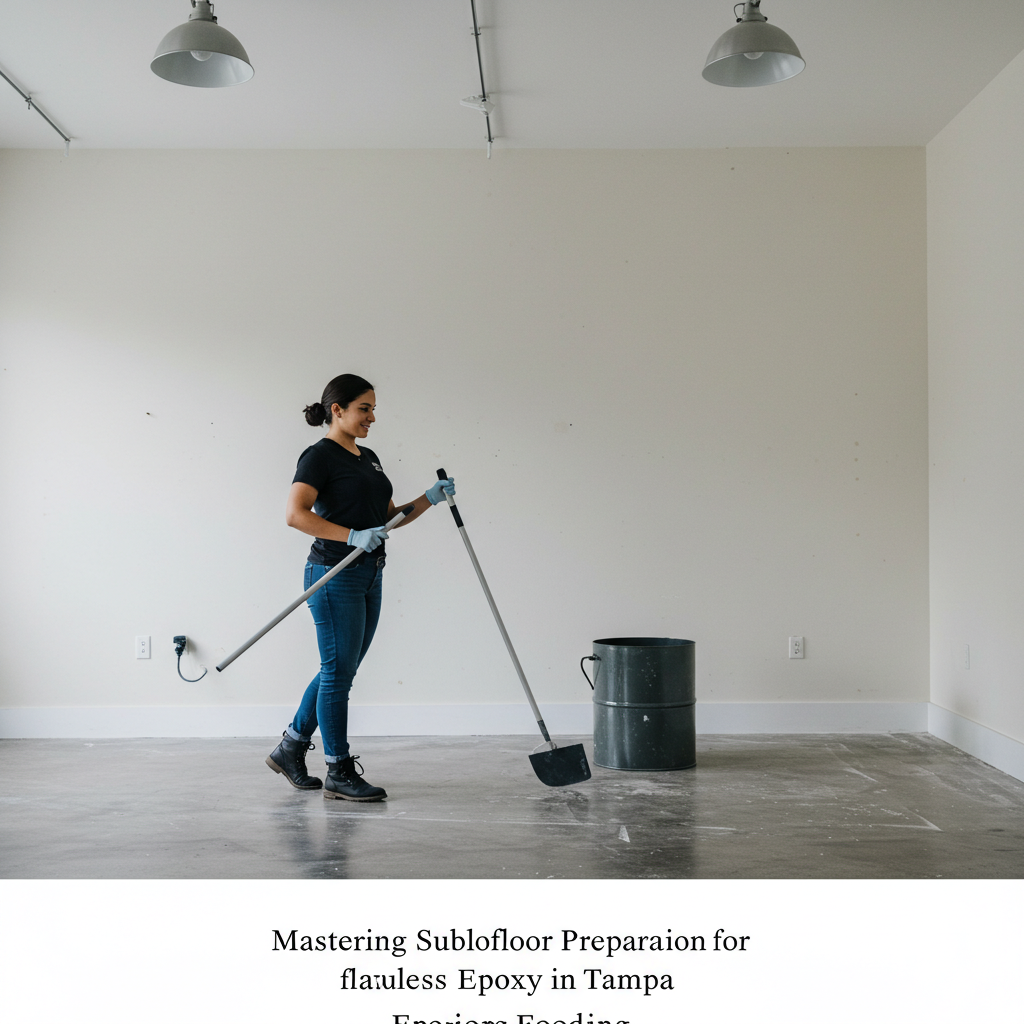
Mastering Subfloor Preparation for Flawless Epoxy Flooring in Tampa
Why is Subfloor Preparation So Crucial for Epoxy in Tampa's Climate?
In the vibrant, humid climate of Tampa, Florida, the success of your epoxy flooring installation hinges significantly on the quality of your subfloor preparation. This isn't merely a preliminary step; it's the bedrock upon which the entire integrity, longevity, and aesthetic appeal of your epoxy system rests. Without proper preparation, even the highest quality epoxy resins can fail prematurely, leading to costly repairs and disappointment.
The concrete subfloor serves as the canvas for your epoxy. Any imperfections, contaminants, or structural weaknesses will directly translate to the finished floor. For example, residual oils or sealers will act as bond breakers, preventing the epoxy from adhering properly to the concrete pores. Similarly, a subfloor that isn't sufficiently profiled will not allow for the necessary mechanical bond, where the epoxy literally grips the concrete's surface.
- Ensuring Superior Adhesion: Epoxy needs a porous, clean surface to bond chemically and mechanically. Skipping preparation means the epoxy won't 'grab' the concrete, leading to delamination.
- Preventing Common Failures: Issues like bubbles, blisters, peeling, and cracks often originate from inadequate subfloor prep. These aren't just aesthetic flaws; they compromise the floor's protective qualities.
- Addressing Tampa's Unique Challenges: High humidity contributes to moisture vapor transmission (MVT) from the ground up, which can cause significant issues if not addressed during preparation. Older concrete slabs might also have unknown contaminants or weak spots that need expert assessment.
- Foundation for Aesthetics and Performance: A well-prepared subfloor ensures a smooth, level, and consistent finish, allowing the epoxy's protective and decorative properties to shine through.
What Are the Essential Steps for Thorough Subfloor Preparation in Tampa?
Effective subfloor preparation is a multi-faceted process that requires precision, specialized equipment, and an understanding of concrete dynamics. Here are the core steps that Tampa Epoxy Flooring Pros meticulously follow to ensure a flawless foundation:
1. Comprehensive Inspection and Assessment
Before any physical work begins, a detailed inspection of the existing concrete slab is crucial. This involves:
- Identifying Existing Coatings or Adhesives: Old paint, sealers, carpet glue, or tile adhesive must be fully removed.
- Checking for Cracks and Damage: Structural cracks, spalling, or crumbling concrete must be repaired to prevent them from telegraphing through the new epoxy.
- Assessing Contamination: Grease, oil, dirt, or chemical spills embedded in the concrete can prevent proper adhesion.
- Moisture Testing: Critical in humid Tampa, this step determines if excessive moisture vapor is rising from the slab, which requires mitigation.
2. Deep Cleaning and Decontamination
Once identified, all contaminants must be thoroughly removed. This goes beyond simple sweeping:
- Degreasing: Specialized industrial degreasers are used to lift oil and grease from the concrete pores.
- Stripping: Chemical strippers might be necessary for stubborn paints or sealers, followed by thorough rinsing.
3. Concrete Repair and Leveling
Any identified damage must be addressed to create a uniform and stable surface:
- Crack Repair: Using epoxy crack fillers or polyurea repair products to seal and reinforce cracks.
- Patching: Filling divots, spalling, and small holes with appropriate concrete patching compounds to create a smooth plane.
- Grinding for Leveling: In some cases, extensive grinding may be required to level an uneven slab, ensuring a consistent epoxy thickness and preventing pooling.
4. Mechanical Surface Preparation (Profiling)
This is arguably the most critical step for achieving optimal adhesion. Mechanical preparation creates a 'profile' on the concrete surface, allowing the epoxy to physically interlock with the concrete pores.
- Diamond Grinding: Utilizes specialized grinders with diamond abrasives to remove the top layer of concrete, contaminants, and create a uniform surface profile. This is suitable for most residential and light commercial applications.
- Shot Blasting: Involves propelling steel shot at the concrete surface at high velocity, creating a rougher, more aggressive profile. This method is often preferred for heavy-duty industrial applications or when a very strong bond is required.
- Understanding CSP (Concrete Surface Profile): The industry uses CSP ratings (ranging from 1 to 10) to describe the roughness. Epoxy typically requires a CSP of 2-3 for thin-mil coatings and 3-5 for thicker systems. The chosen method directly impacts the final CSP.
5. Thorough Vacuuming and Dust Removal
After mechanical preparation, the subfloor will be covered in concrete dust. This dust acts as a bond breaker and must be completely removed. Industrial-grade HEPA vacuums are used to ensure every speck of dust is eliminated, leaving a pristine surface ready for primer.
How Does Moisture Mitigation Impact Epoxy Flooring Success in Humid Tampa?
Tampa's high humidity and subtropical climate present a significant challenge for epoxy flooring installations: moisture vapor transmission (MVT). Concrete is inherently porous, and moisture from the ground can wick up through the slab in the form of vapor. If this vapor pressure is too high, it can lead to devastating consequences for your epoxy floor:
- Delamination: The most common failure, where the epoxy lifts or peels away from the concrete as moisture builds up underneath.
- Bubbling and Blistering: Trapped moisture vapor expands, creating unsightly bubbles or blisters in the epoxy.
- Adhesion Loss: Moisture at the concrete-epoxy interface weakens the bond over time.
- Efflorescence: White, powdery salt deposits can form, indicating moisture issues and potentially compromising the epoxy.
To combat this, professional epoxy installers in Tampa employ rigorous moisture mitigation strategies:
- Accurate Moisture Testing: Before any epoxy application, a professional will conduct precise tests to measure the MVT rate and relative humidity (RH) within the slab. Common tests include calcium chloride tests (measuring vapor emission rate) and in-situ relative humidity probes (measuring moisture within the concrete itself).
- Vapor Barriers and Moisture-Tolerant Primers: If MVT levels exceed acceptable limits for standard epoxy systems, specialized moisture-tolerant primers or dedicated epoxy vapor barriers are applied. These products are designed to withstand and block significant moisture pressure, creating a stable surface for the subsequent epoxy coats. They chemically bond to the concrete and form an impenetrable layer, protecting the decorative topcoats.
Ignoring moisture mitigation in Tampa is a recipe for epoxy failure. It's a critical investment that safeguards the entire flooring system against the region's environmental challenges.
When Should You Consider Professional Subfloor Assessment Before Epoxy Installation in Tampa?
While some homeowners might consider DIY approaches for small-scale projects, when it comes to epoxy flooring, especially in a demanding environment like Tampa, professional subfloor assessment and preparation are almost always indispensable. You should unequivocally consider professional assessment if:
- Your Concrete Slab is Old: Older slabs can have decades of wear, contaminants, unknown previous coatings, or inherent structural issues that require expert diagnosis.
- You Suspect Moisture Issues: Any signs of dampness, efflorescence, or a history of moisture problems in the area (e.g., a garage that floods) necessitate professional moisture testing.
- There are Extensive Cracks or Damage: Large cracks, significant spalling, or unevenness require specialized repair techniques and materials that DIY solutions often can't provide effectively.
- You Want a Warranty: Most reputable epoxy contractors will only offer a warranty on their work if they have performed or overseen the subfloor preparation, as this is the most common point of failure.
- You're Installing in a High-Traffic or Commercial Area: The demands of commercial or industrial environments require a perfectly prepared subfloor to withstand heavy use, chemicals, and equipment.
- You Desire a Flawless, Long-Lasting Finish: Professional prep ensures the highest quality outcome, preventing common issues that detract from appearance and durability.
Tampa Epoxy Flooring Pros specializes in comprehensive subfloor assessment and preparation, utilizing state-of-the-art equipment and deep expertise to identify and rectify any potential issues before they compromise your investment. By understanding the unique challenges presented by Tampa's climate and concrete conditions, we ensure your epoxy floor adheres flawlessly and lasts for decades. Don't leave the foundation of your beautiful new floor to chance; contact Tampa Epoxy Flooring Pros today for an expert consultation and ensure your subfloor is perfectly primed for success.
Need Professional Assistance?
Get a free, no-obligation estimate from our expert local team today.