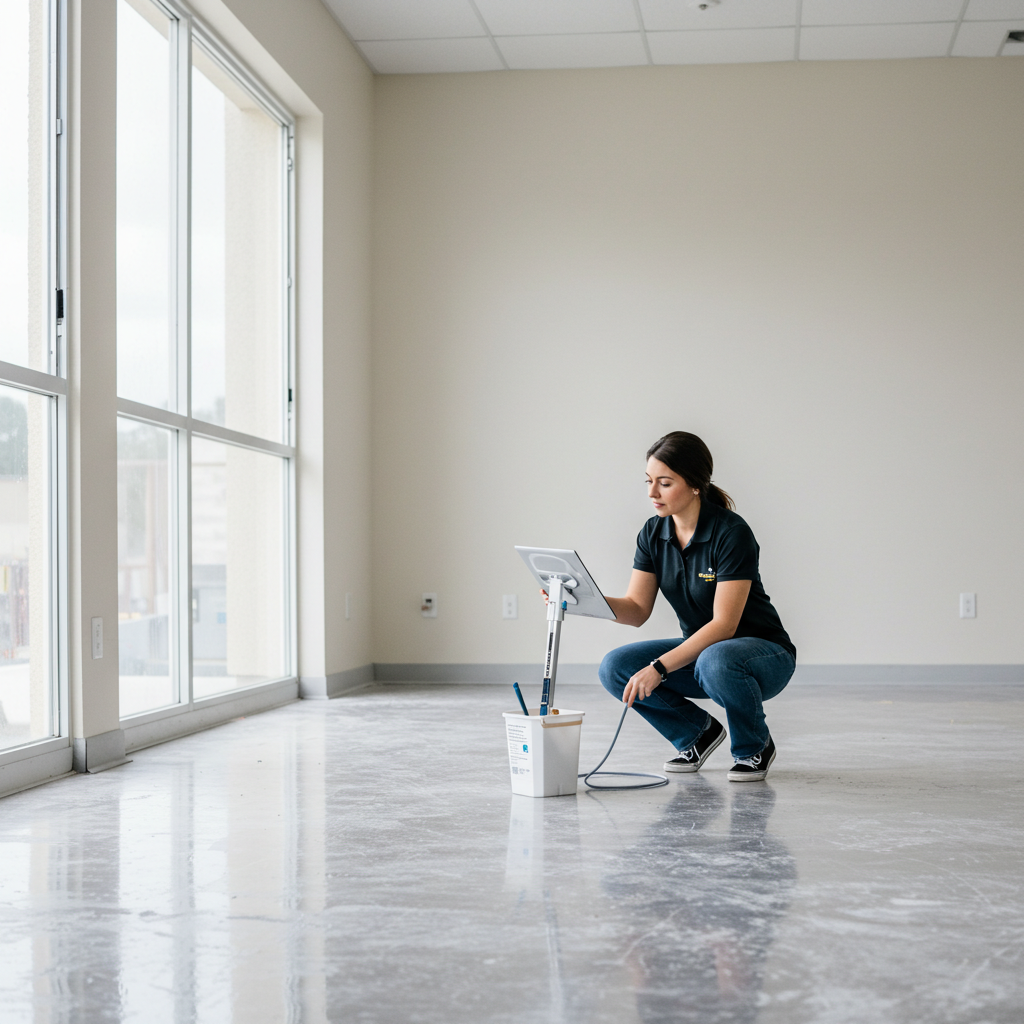
Ensure Perfect Epoxy in Tampa: The Critical Role of Moisture Testing
Why is concrete moisture testing essential for epoxy in Tampa?
Tampa's climate is notoriously humid, and this humidity, combined with the often porous nature of concrete, creates a challenging environment for epoxy flooring. Concrete slabs, whether new or old, can retain significant amounts of moisture, either from the initial mixing water, rising damp from the ground, or even vapor migrating through the slab from high water tables. Epoxy coatings form a non-breathable barrier over the concrete. If moisture is trapped beneath this barrier and attempts to escape, it will exert pressure on the epoxy, leading to a host of problems. This is particularly prevalent in a warm, moist environment like Tampa where vapor drive can be considerable.
- Prevent Delamination: Moisture trying to escape creates hydrostatic pressure that can literally lift the epoxy coating off the concrete substrate, causing large sections to peel away.
- Avoid Bubbling and Blistering: Smaller pockets of moisture can cause localized bubbles or blisters as the vapor pushes against the curing epoxy.
- Inhibit Adhesion Failure: High moisture content can compromise the chemical bond between the epoxy and the concrete, preventing proper adhesion from the start.
- Prevent Microbial Growth: While epoxy itself is resistant, moisture trapped underneath can contribute to an environment where mold or mildew could potentially grow, although this is less common with modern epoxy systems.
Understanding the 'why' behind moisture testing emphasizes its role as a foundational step for any durable epoxy floor in the Tampa Bay area.
What are the common methods for concrete moisture testing?
Professional epoxy installers use several reliable methods to accurately measure moisture content in concrete. Each method offers different insights and is crucial for a comprehensive assessment.
- Calcium Chloride (ASTM F1869): This is one of the oldest and most common methods. A dish of anhydrous calcium chloride is sealed under a plastic dome on the concrete surface for 60-72 hours. The calcium chloride absorbs moisture, and the weight gain is used to calculate the moisture vapor emission rate (MVER) in pounds per 1,000 square feet per 24 hours. Most epoxy systems require an MVER below 3-5 lbs.
- Relative Humidity (RH) Probe (ASTM F2170): Considered by many to be the most accurate and reliable method, this involves drilling holes into the concrete to a specific depth (typically 40% of the slab thickness for a slab on grade) and inserting a special sensor probe. After allowing the probe to equilibrate for a set time, it directly measures the internal relative humidity of the concrete. Epoxy manufacturers typically specify maximum RH levels, often between 75-85%.
- Electrical Impedance Meters: These handheld, non-invasive meters provide quick, qualitative readings of surface moisture. While useful for identifying potential hot spots and for initial assessment, they are not typically used for definitive 'go/no-go' decisions as they only measure surface moisture and are affected by concrete composition.
A combination of these methods, particularly RH probes, offers the most accurate picture of your concrete's moisture condition, ensuring that the conditions are optimal for epoxy application.
How does high moisture affect your epoxy floor's lifespan?
Ignoring high moisture levels in your concrete slab before an epoxy installation is akin to building a house on a shaky foundation. The consequences are not just aesthetic; they significantly impact the functional lifespan and performance of your epoxy floor, leading to costly repairs or even full replacement.
- Premature Failure: As discussed, delamination and bubbling are direct results of moisture pushing the epoxy off the substrate. This dramatically shortens the floor's useful life.
- Reduced Durability: Even if full delamination doesn't occur immediately, areas with high moisture can experience a weakened bond, making the epoxy more susceptible to chipping, cracking, or damage from impact and abrasion.
- Substrate Damage: In severe cases, constant moisture pressure can also degrade the concrete itself over time, especially if there are salts or other soluble minerals present, further compromising the entire flooring system.
- Warranty Issues: Most reputable epoxy manufacturers and installers will void their warranties if proper moisture testing was not performed or if the concrete's moisture levels exceeded specified limits at the time of installation. This leaves you, the property owner, responsible for all repair costs.
Ultimately, a floor installed over high moisture will fail long before its expected lifespan, turning an investment into a liability.
When should you conduct moisture testing for epoxy projects?
Moisture testing isn't a 'one-and-done' event but rather a critical step at a specific phase of your project. For optimal results and to avoid surprises, testing should be conducted under conditions that accurately reflect the environment the epoxy will experience long-term.
- After Concrete Curing: For new concrete slabs, allow ample time for the concrete to cure and dry. While concrete may feel dry to the touch in a few days, it can take weeks or even months for the internal moisture to equilibrate, especially in Tampa's humid climate.
- Environmental Conditioning: Ensure the building's HVAC system is operational and set to the conditions it will maintain during normal use and during the epoxy application. Significant changes in temperature or humidity can alter moisture readings.
- Just Before Installation: The most crucial time for testing is shortly before the planned epoxy installation. This provides the most relevant data regarding the current moisture conditions of the slab. If too much time elapses between testing and installation, conditions can change, necessitating re-testing.
Timely and accurate moisture testing is a non-negotiable step that ensures the concrete is truly ready to receive an epoxy coating.
Can I do moisture testing myself, or should I hire a professional?
While basic electrical impedance meters are available for consumers and can give you a rough idea of surface moisture, for a definitive and reliable assessment, especially for a significant investment like epoxy flooring, hiring a professional is highly recommended. Here's why:
- Accuracy and Expertise: Professional installers, like Tampa Epoxy Flooring Pros, have specialized equipment (like calibrated RH probes and calcium chloride kits) and the expertise to properly conduct tests, interpret results according to industry standards (ASTM), and understand their implications for specific epoxy systems.
- Comprehensive Assessment: A professional will know where and how many tests to conduct, taking into account the size and age of the slab, potential sources of moisture, and any visible signs of issues.
- Recommendations and Solutions: If high moisture is detected, a professional can recommend appropriate moisture mitigation solutions, such as vapor barriers or specialized primers, before proceeding with the epoxy application. Attempting to DIY these solutions without proper knowledge can lead to further complications.
- Warranty Preservation: Many epoxy manufacturers require documented professional moisture testing to uphold product warranties.
For a beautiful, durable, and long-lasting epoxy floor in Tampa, the foundational step of professional moisture testing cannot be overstated. It protects your investment and ensures the integrity of your new flooring. Trust the experts at Tampa Epoxy Flooring Pros to conduct thorough moisture assessments and provide a flawless epoxy installation that stands the test of time. Contact us today for a consultation and ensure your concrete is perfectly prepared!
Need Professional Assistance?
Get a free, no-obligation estimate from our expert local team today.